

Introduction
This article is for the physics minded of my friends on the LinkedIn sphere. It really requires an open mind that embraces both the concepts of astro- and quantum-.
This article details how the holographic projection universe concept can be used to explore the idea of faster than light travel.
The Holographic Principle
Premise: Given conservation of information, the surface area of a bound / finite universe contains the same information as the volume of the universe. This leads to limitations of density of information in the universe, which has been mathematically modelled.
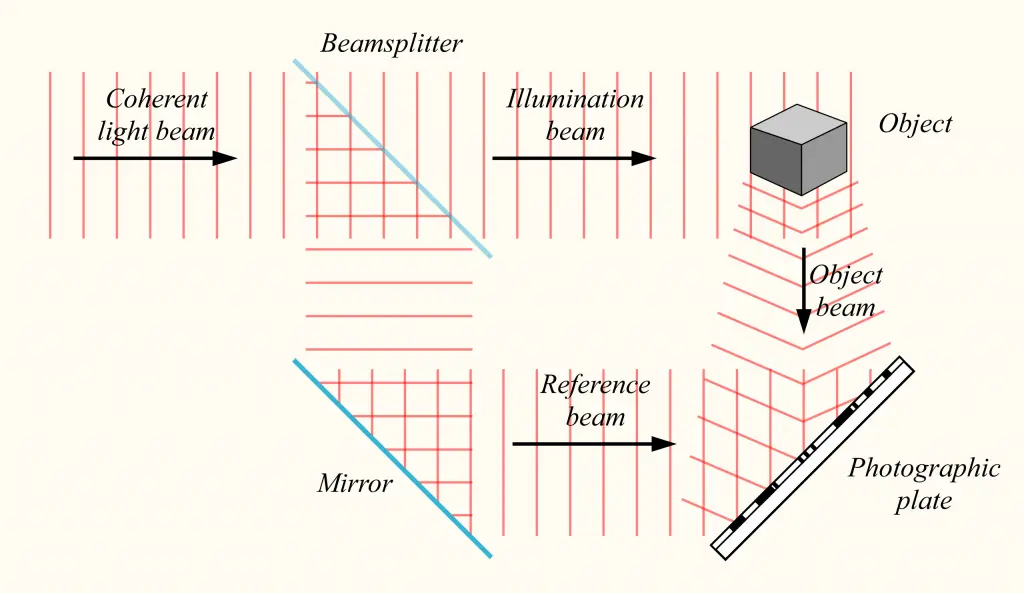
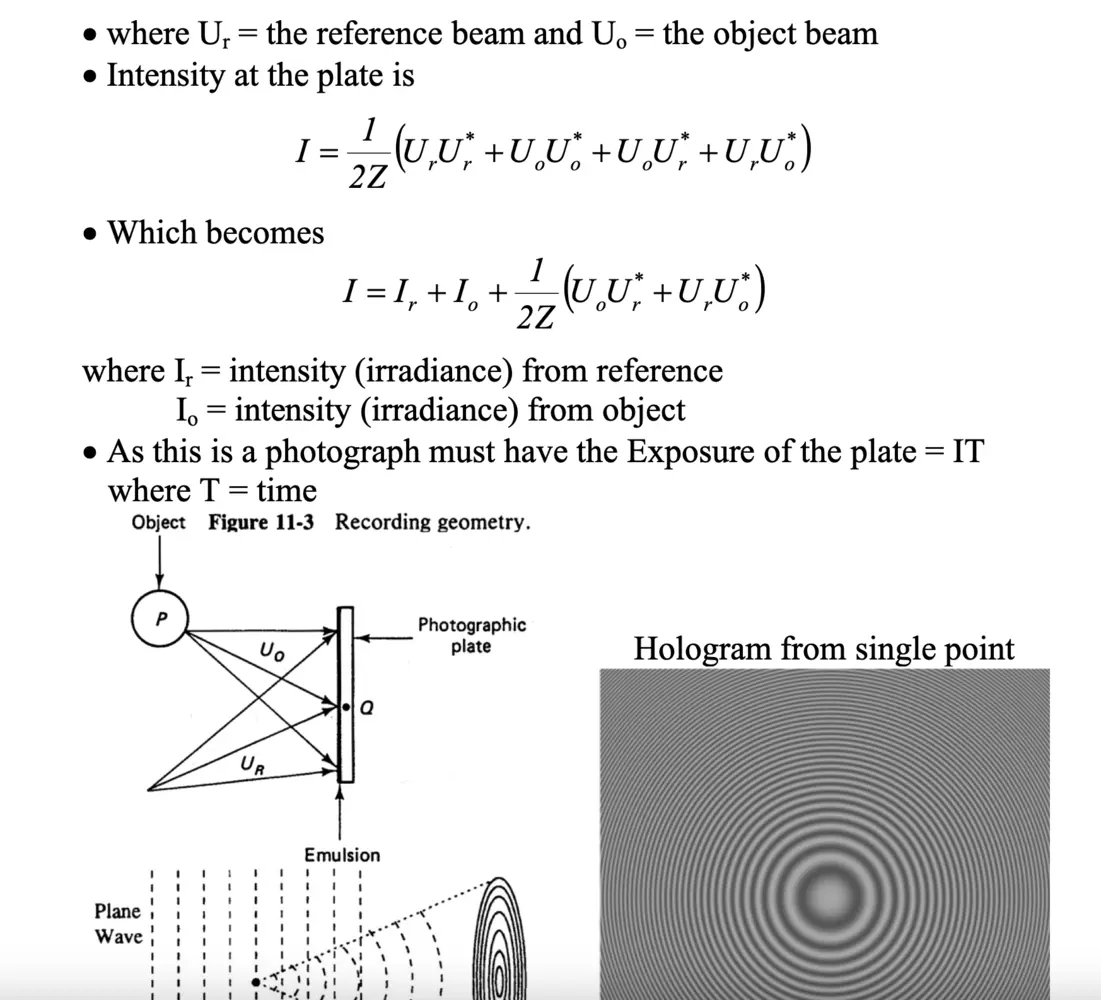
Often compared to a hologram, the idea is that the information in the 2D surface maps to the information in the volume. Continuing the analogy to a traditional hologram. The flat hologram contains the same information as its 3D projection, and hence the 3D resolution is limited by what we can contain in the 2D surface.
Whilst discussing this with my partner Verónica Marcano, she asked whether we existed in the 2D horizon OR the 3D volume. My answer was that we existed in BOTH.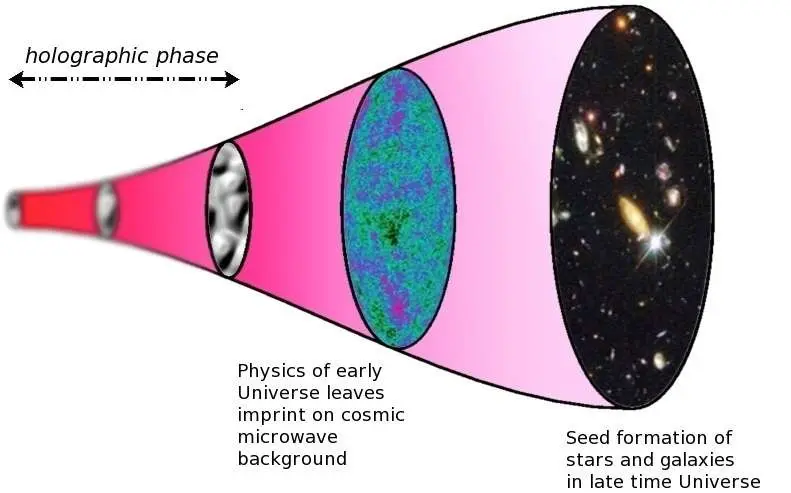
Information Distribution Across Dimensions
This has some rather dramatic implications. Information about X,Y,Z coordinates in the 3D volume is not stored in a corresponding A,B fixed point in the 2D holographic surface, in fact it is spread across the large parts if not all of the surface. It is the mapping / projection of a hologram that brings it together at a point.
The implication of this is that whilst we exist in localized space in the 3D universe, we / our information exists across all of the surface of the bound universe.
On this basis, our information overlaps with information about all other objects in the universe.

Observing and Influencing Distant Parts of the Universe
If we can understand how to view / interact with information at the universe boundaries, then we can view / interact with objects anywhere in the universe.
Given that we conceptually experience localised 3D space, the idea of viewing information at the 2D bounding holograph, is alien to us. However, given that the 2D bounding surface actually drives the background noise and resolution we see in the universe, if we can decode and map that background noise and observed uncertainty back to the holographic horizon and then again transform it back to 3D, in theory we should be able to look at any other part of the universe (with limited resolution).
Further implication would also be that if we can also make the right coordianted changes to large enough parts of our localized space, we could actually influence another part of the universe.
Implications for Extraterrestrial Life and Physics
In theory if we wanted to look for extra terrestrial life, we should be looking with a 3D -> 2D -> 3D transform of background noise and observed uncertainty. That is going to require a huge amount of mathematics and sensor arrays. Like most ideas, it all starts with a theory.
Currently most if not all of our physics is based around the interactions of our observed 3D space and time spacetime continuum. If we buy into the holographic universe then the next big physics breakthroughs will be coming from the physics of the 2D information / time continuum, where our current theories on time may also start to be revisited.
Key Takeaways:
- Holographic Principle: The 2D boundary of a finite universe encodes the same information as its 3D volume, suggesting our reality may be a projection from a 2D surface.
- Information Distribution: Information in 3D space is spread across the entire 2D boundary, not stored at fixed points, creating overlaps with all other objects in the universe.
- Faster-than-Light Potential: By decoding the 2D boundary information, we could theoretically observe and influence distant parts of the universe.
- Extraterrestrial Search: Finding alien life may require 3D -> 2D -> 3D transforms of background noise and uncertainty.
- Physics Revolution: The next breakthroughs may come from understanding the 2D information/time continuum rather than traditional 3D spacetime.